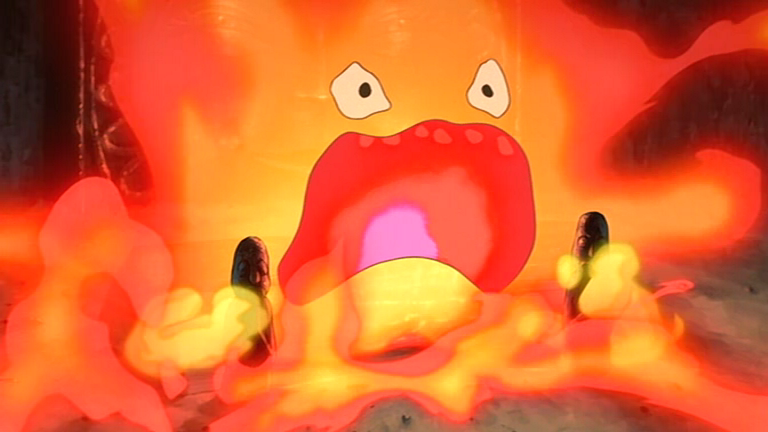
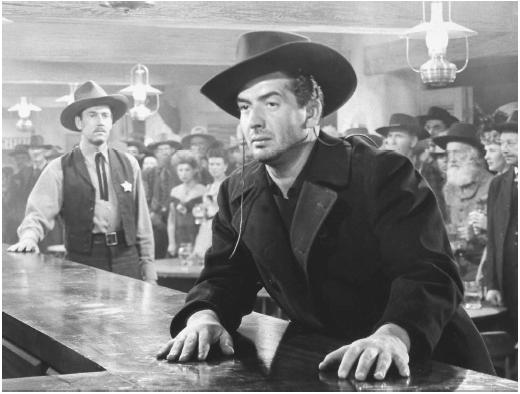
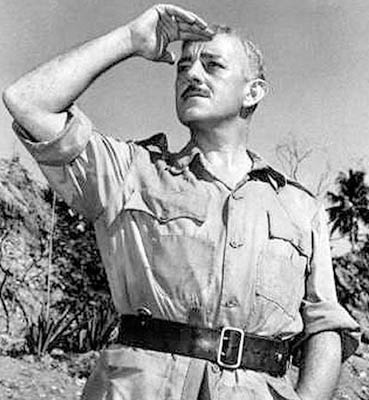
Tuesday, May 27, 2008

The Life Aquatic is rather uneventful.


An interesting part of The Life Aquatic is its use of what looks to be very badly done computer animation but really is stop-motion animation. Taylor Jessen explains in this interview with Henry Selick, who creates stop-motion animated films and was in charge of The Life Aquatic's sea creatures. When Steve Zissou and his comrades go diving, they don't find normal marine life. They encounter red seaweed and bizarre creatures, Bill Murray even at one point flicking a little yellow gecko off of his hand.


Granted, the whole thing is rather pointless, as it contributes nil to the plot of the movie, but it offers an interesting, unorthodox set of visuals. It, however, seems to overpower the storyline. The movie isn't supposed to be a science fiction, so what's the point? It confused me, but I guess I'm not complaining, as it didn't really detract from the movie other than being distracting.

Wes Anderson's style really comes through in this movie. It has Bill Murray, Owen Wilson, dark humor, romance, swearing, and completely unnecessary, random, and pointless nudity (the posters in Royal Tenenbaums and Rushmore along with the crew member in Life Aquatic). Something I also noticed was that Anderson tends to use a little bit of slow-motion in each of his films. As far as I can see, it doesn't really contribute much to the films, but it's just a little quirk of his. The best unique part of his movies, however, is his off-the-wall moments of absurd humor. In The Life Aquatic, the crew members install radios into their helmets and listen to techno while diving. They keep retarded dolphins with cameras on their heads as scouts. The best part of the movie, however, is a 60+ year old Bill Murray taking down about 50 armed pirates alone with a single pistol all while avoiding even the slightest injury (Indiana Jones comes to mind). He even does this twice.

Friday, May 2, 2008

Anton Sugar is coming for you.

All three of the Coen Bros. movies we watched were simply amazing.

In no other movies can you find being chased by dogs after raiding a convenience store for some Huggies, a guy randomly being put into a wood chipper, or a badass guy with a massive silenced shotgun, and bad haitcut, and a last name sounding peculiarly like sugar.

I couldn't really say I liked one of the Coen movies more than the others, although I did enjoy Raising Arizona and No Country more than I did Fargo. It's just that Raising Arizona was a comedy while Fargo was not, and No Country was simply Fargo but better in nearly every way. Maybe it was the bothersome accents that put me off, or maybe it was the forbidding landscape. I dunno.

I did think it was interesting how the main character in No Country randomly got killed by some Mexican drug dealers about halfway through the movie. When a main character dies (which is rarely), he takes about 40 minutes to die in the arms of his comrade, says a few sappy last words, and croaks. Not Llewyn Moss, though. We just walk in and he's just on the floor, filled full of lead, and we switch to a new main character. Very unconventional and refreshing. He was starting to annoy me anyway.

"Hey, you still got your damn shirt!"

Thursday, April 17, 2008

Robert "Old Man"

I actually enjoyed Altman's movies, although I did despise Nashville in pretty much every way imaginable. The Long Goodbye, for example, had a really great cast. The Elliot Gould character was classic with his mumbling and grumbling, and who can resist throwing a coke bottle at a woman's face to make a point?

Nashville, on the other hand, really bothered me. Not only did it lack a clear plot one could follow, it had a completely unnecessarily large number of side-plots to keep track of. Tack the fact that they're completely pointless, full of hicks and badly done country music, and depressing, and you have yourself the most revered movie of the 70s! It's an instant classic!

The Player I did like though. It had an interesting PLOT, not PLOTS, and was full of murder, intrigue, money, Bruce Willis, and completely unnecessary sex scenes. All the ingredients for a classic.

Altman's directing style was annoying in some parts, though. In The Long Goodbye, I wasn't exactly overjoyed to randomly see two dogs humping in the street or a bunch of stoned chicks asking for cake mix - chocolate and vanilla, of course - and a random strip tease by Suleen Gay.

Monday, March 17, 2008

Let's kill off all the main characters!


You know those are cool sunglasses.

Akira Kurosawa is actually pretty good. I knew he was good from the start, but as usual I was pleasantly surprised. Again.

Anyway, I'd say Yojimbo was my favorite movie of his, followed by Ran, with "Stray Dog" not even making the list. That loud panting in the main menu of "Stray Dog" made me cringe and the movie didn't do much to alleviate that. Anyway, I can't get enough of the theme song in Yojimbo, the one that plays whenever the samurai guy is rollin' down the street looking for stuff to cut up. I just can't get enough of that. For example, when he walks up to the "badass" bad guys and cuts up about four of em, he just calls em cute, cuts em all up, and walks away with his awesome theme song playing. How cool is that?

The best part, though, is the bad guy who... well, I'll just let the scene speak for itself. The coffin guy tells him that there were four coffins made for the opposing "family", and two for his. He holds up two fingers, counts on them, and about five seconds later he says "Good, good." How awesome is that? He also helps carry Sanjuro to safety, despite trying to kill him. I'm telling you, the guy's beyond awesome. He's super special awesome.

Saturday, March 1, 2008

It's making too much sense! Make it stop!!!

These little clicky-head guys are the coolest things I have ever seen in my entire life.

Anyway, Princess Mononoke was an amazing movie.
I easily enjoyed it the most out of all Miyazaki's movies, but the one thing that really stood out was that it made some sense. It, instead of throwing in random characters like the rolling heads in Spirited Away and the top-hat ghost things in Howl's Moving Castle, actually uses meaningful characters and relates to a contemporary issue, protection of the environment. It, however, does it with spunk. Lots and lots of spunk. Everything is a spirit and there is a lot of random battle and slaughter. For example, the main character punk kid shoots a bunch of guys with his bow. He hits them all in the neck. What do these arrow heads each less than an inch wide do? Well, they knock the guys' heads clean off. Honestly, what the hell? I guess I'd better watch out for arrows or my head's gonna come flying off too.

The coolest part of the movie, though, is these awesome little clicky guys pictured above. Basically, they're these little things that randomly run around and click their heads. They ride on each others' heads, jump around, and appear from trees. There is also a random shot of thousands of them clicking at once. How awesome is that?

Thursday, February 28, 2008

Let's Hitchcock it up.


Here in this wonderful portrait, Hitchcock is trying to impersonate Doctor Evil but is having a bit of trouble, namely using the wrong finger.

Anyway, I must say I was pleasantly surprised with Hitchcock's movies, because before now I had thought of him as some old director of bad horror movies (Psycho and/or The Birds). After seeing 3 of his movies, I can actually say that I really enjoyed them despite how old they are.

He has a very unique style that I really found interesting and I particularly liked his tendency to prefer suspense to surprise, and this was very apparently in Rear Window, when Girlie Sue is in Thorwald's apartment and we see him walking down the hallway to his apartment, I was genuinely wondering what was going to happen. This is obviously different from other directors because in their movies I know the main character is invincible and everything will be peachy in the end. Hitchcock changed that, and it was a very refreshing change of pace.

What kinda creeped me out is Hitchcock's disturbing obsession with stalking and "smart blonds". Hmmm...

Monday, February 18, 2008

Now the ghosts have top hats.

Well now. In Spirited Away I was trippin' out and wondering what in the name of jackassery was going on, but now in Howl's Moving Castle, I was wondering why time didn't matter anymore.

Take Girlie Sue, for example. She starts out at maybe 20 years old. Some amoeba/witch thing puts a curse on her and she wakes up at like 30,000 years old. We can see that this is somewhat possible assuming that witches can cast spells and stuff. It gets better, though. She becomes a very feminine wizard's cleaning lady at the request of the complete studmuffin/fire thing/garbage disposal/loudmouth above. Anyway, she randomly becomes younger, maybe 60 years old, doesn't hunch over to 2 feet tall anymore, and has a somewhat normal voice. Then, the wizard randomly walks into the closet and there she is, sleeping, 20 years old again. He runs away screaming (not really) and she becomes 30,000 years old again the next morning. This happens maybe half a dozen times in the movie and by the end she's back to her old self, except she has gray hair for no reason. Yeah. Don't ask.

Howl's moving castle has an enjoyable cast of confusing characters. We've got the same old ghost blob things, but this time they have top hats. (How cool is that?) We've got a scarecrow pogo stick turnip thing, we've got an old woman race to the top of stairs and one of them melts on the way up. There are also a squeaking, obese dog that can fly with its ears, an amoeba person, a feminine wizard who turns to goo when he has an emo attack, and awesome guys who run around carrying a blob in a box.

Case in point: Dubbya tee eff is going on here?

My purpose in life is now to find out what Miyazaki is smoking.

Wednesday, February 13, 2008

Go away, you damn ghost things!


Hayao Miyazaki's Spirited Away was trippy, dude. Far out. I know I'm going to be blasted as "racist" for this, but as far as I have seen, 99% of Japanese things are completely crazy and make about one atom of sense. Commercials, movies, game shows, you name it. It's all crazy and looking at it for more than a second or so would give nearly anyone a siezure. Spirited away was no different.

Basically, a girl, Chihiro, on a car trip with her parents, randomly finds an abandoned theme park and is transported to a very... interesting spirit world bathhouse thing. She then has to go on a quest to bring back her parents who were (of course) turned into pigs. There are chicken people, frog people, rolling decapitated heads, a cannibalistic blob who can spawn gold, and a skeleton who barfs up a junkyard and can fly. What else? Anyway, Chihiro outsmarts the evil witch who runs the bathhouse and is randomly transported back where she started.

Hayao Miyazaki obviously has a very "unique" style. Spirited Away is a great movie, I'll grant it that, but the setting was nothing less than a psychedelic wonderland and frankly it made no sense. I could easily sit here for several hours and tear the movie apart for that, but that was the purpose of the movie methinks. It's just an escape from having to have everything make sense.

On IMDB, Spirited Away got an 8.5 out of 10 and is the 56th best movie on there according to viewers. I'd say they agree with me that it's a damn good movie.

Tuesday, December 18, 2007

Do the Right Thing, eh?


Buggin' Out here basically results in the death of one of his comrades because of his incredibly obstinate nature and desire to pick fights in general.

As he showed with a white biker who accidentally ran over his shoes yet apologized or it, Buggin' Out insists on picking fights with all the whites around him.

Buggin' Out also sparks an argument with Sal because there aren't any blacks on his wall of famous Italian-Americans. It's Sal's shop and Sal has the right to do anything he wants in his shop. If I recall correctly, Italian-Americans are almost completely white, as Italy played almost no part in the trans-Atlantic slave trade. Telling Sal to have a correct percentage of black people on the wall is telling him to model his wall after the racial makeup of the country, but race is only one aspect of a person. That's like calling Sal discriminatory for not having the correct number of people above 5'10", the correct number of people with chicken pox, or the correct number of people with health insurance. The entire concept is absurd.

Tuesday, December 11, 2007

The Battle of Algiers


I read this review for The Battle of Algiers.

The author makes a good point in that we are facing the same situation in Iraq as the French faced in Algeria in the 50s. The enemy cannot be beaten if they can't be found with ethical means. That's why resistance groups are so potent despite their lack of resources, skills, or strength. They fight dirty, kill civilians, but are protected by the fact that nations can't make any low blows. That's like a midget with a minigun vs. an 8 foot tall, 500 pound guy with a plastic spoon and both arms tied behind his back by the UN.

My opinion is this. If you're going to fight a war with rubber bullets, you might as well not fight the war at all. Either pull out or do what needs to be done to win. Otherwise, you're just getting people killed and wasting money.

Wednesday, November 28, 2007

Momento


I really found Momento to be a great movie. Not only was it interesting and gripping, it actually had a good plot. It genuinely had me confused even at the end of the movie but I couldn't help but really want to find out the truth.

Frankly, I think Teddy was telling the truth. He may have been fishy or suspicious, but he was actually Leonard's ally the whole time yet never really betrayed him. He also gave the audience and Leonard an explanation that really tied everything together, however imperfectly. Then again, nothing's perfect.

Thursday, November 15, 2007

Kiss Me Deadly, damnit!

What a terrible movie.

Christina, or whatever her name was, was hideous and she sounded like she was sexually aroused during the opening credits. What kind of impression did the director think that was going to give? Certainly not a positive one.

Her roommate was irritating. Her voice was nasal and she was annoying as hell. At least she turned evil in the end and died, but the flame "special effects" were abysmal.

Now, why did they have to kill Nick off? He was the coolest character in the entire movie. When he died, I stopped really paying attention to the movie, because there was no longer any "va va voom!" to keep me interested.

What the hell is up with a nuke in a box? If I recall, it's one explosion and then radioactive decay sets in. There's no way there is a continued source of radioactive energy, and even if there was one, it wouldn't fit inside a small, wood box. The box would be made of lead... and whoever saw it would get severe burns all over their body and get radiation sickness as their bodies slowly but surely shut down from internal damage. They wouldn't start screaming and stand there as a flame is superimposed in front of them. Honestly.

Tuesday, November 13, 2007

Double Indemnity!?


Double Indemnity wasn't that great of a movie, but it had a decent plot. At least it had murder, sex, and money, but there weren't enough stereotypical thugsters like the one on the left here. Therefore, it can at best be a decent movie.

Although Phyllis was a complete and utter whore, she added spunk to the movie and at least dies at the end, also causing the death of the other scumbag main character, Walter Neff.

Anyway, I can't help but wonder why film noir loves those lined shades. It doesn't really give an effect, it just distracts the viewer from who happens to be getting murdered at any given point in time. Film noir would have far more spunk if people got murdered in pitch-black rooms, so the viewer would have NO idea what the hell's going on until the movie's over. They'd be confused, but movies are usually considered good if the audience is left wondering what the hell just happened.

Tuesday, November 6, 2007


Groundhog's day was actually a good movie, but it made even less sense than this picture.

How is it physically possible to relive the same day over and over again? Which run-through of the day will other people remember? They would have so many recollections of the day their heads would most likely implode.
Time is linear. There is no way to slow down or speed up time, much less reverse it. There are so many logical fallacies on Groundhog's Day that it really detracts from the movie.
Also, what is preventing Phil from staying up until 6:00 am? If he does, then what? Does the universe collapse into a tiny dot of superheated matter? Does his existence split into two?
Last but not least, even if this was possible, why does he remember the day and no other people do? Memory is a physical thing, a mapped-out set of circuits in the brain. Why don't those get reversed to their previous state? Why are all the other peoples' minds wiped clean but not Phil's? Everyone else would also remember that day and are stuck in it, but Phil is the object of attention.

Case in point: What the hell?

Wednesday, October 31, 2007

Bringing up Baby

No, not that kind of leopard. Anyway, Susan needs to die. She is so incredibly annoying, I want to rip off one of more of her limbs. Probably the least used and least needed one, her head.

Anyway, Bringing up Baby was a rather mediocre movie with an incredibly stupid title. What the hell kind of name for a leopard is Baby? Ugh.

I wouldn't have minded the movie, as it had decent supporting actors, a good actor for the paleontologist (Whatever his name is), and I found the constable particularly humorous. It also had decent slapstick humor and a pretty good "plot", but I just found Susan to be incredibly annoying and it completely ruined what could have been a very good movie.

Wednesday, October 24, 2007

Westerns, eh!?


Westerns are wrong. So wrong. Honestly, they're all the same. The main character's name may be Billy Bob, Billy Joe, Joey Bob, Joey Bill, or any other combination of stereotypical characters and names. He's always a virtuous guy who gets the chick in the end, defeats the bad guy in the final gunfight, etc. etc.
The Indians were not just random guys on horses running around slaughtering the innocent settlers. They weren't stupid. Any Indian tribes who had any contact with whites used guns. They didn't use bows and arrows up to 1900. They also didn't start scalping people. Believe it or not, that was a European practice they picked up. Yes, there were skirmishes, but not all Indians were warriors. There were probably more Indian women and children slaughtered by American militia than the other way around. Honestly.
Not to mention the women. There are either a whore or a "damsel in distress", or both. I sincerely doubt every single woman in the West during that time period fell into one or both of those categories.
Then again, people remember their history as they want to remember it. Many people deny the Holocaust never happened, we don't want to think about expansion or slavery, Germany doesn't want to remember their atrocities in WWII, Turkey refuses to recognize the Armenian Genocide. Stalin rewrote history with himself as the triumphant hero. The list goes on. Then again, the winners write the history books.

Monday, October 15, 2007

Finding 'Finding Nemo'!


Directed by Andrew Stanton and Lee Unkrich, Finding Nemo is a family comedy starring a fish. More specifically, that fish's name is Marlin.

After losing Coral, his "mate"/"wife" and all but one of their eggs to a vicious barracuda, Marlin names the surviving egg "Nemo", one of Coral's favorite names. Years later, he takes Nemo to his first day at school and embarrasses him in front of his classmates. Defying his father, Nemo swims out away from the reef into the open ocean and is instantly swept up by a boat and sent off to Sydney, Australia.

Marlin then embarks on a quest to find his son, slowly working his way toward his objective with his companion, Dory, a blue tang with short-term memory loss. The two fish encounter many obstacles along the way, including sharks, whales, and, of course, a lack of direction. They meet friends along the way though, most important of which being a group of hippie turtles who accompany them in the final stretch to Sydney.

Meanwhile, Nemo and his fellow fish in a dentist's office plot their escape before they are destroyed by the dentist's demonic daughter. Fortunately, one of their numerous plans succeeds, and they escape into the open ocean. What a surprise! A happy ending!

Finding nemo easily achieved the feat of highest grossing opening weekend for an animated feature, raking in $70,000,000. Totaling over $850 million, it, as of March '04, is one of the top ten highest-grossing films ever.

Finding Nemo also sports a colorful cast. Playing the part of Marlin is Albert Brooks. Born into a Jewish family in Beverly Hills, California, in 1947, he had relatively famous parents and siblings, setting him up for a celebrity lifestyle. Brooks originally went to Carnegie Tech in Pittsburgh, but dropped out to pursue a career in stand-up comedy. He later directed six short skits for Saturday Night Live and directed many fairly unsuccessful films. He then began voice acting for various films, Finding Nemo being by far his most successful. Brooks also played the main antagonist in The Simpsons Movie in '07.

Playing the part of Dory is Ellen DeGeneres, another stand up comedian. Born in Metairie, Louisiana, DeGeneres graduated from Atlanta High School, and majored in communications at the University of New Orleans. She, after stints as a waitress, clothes seller, house painter, hostess, bartender, dancer, and oyster shucker, finally became a stand up comedian. Working her way up to well-known comedies such as "The Tonight Show", DeGeneres later hosted the popular sitcom "Ellen". During the sitcom, she "came out of the closet" and made it public that she was a lesbian, while her character in Ellen did the same. After the coming out episode, the show began to falter and was canceled after four seasons. She then returned to stand-up comedy and later became a talk show host. Later, she hosted the failed "The Ellen Show", and turned to voice acting and played the part of Dory in Finding Nemo.

Overall, Finding Nemo is a fascinating movie with a very colorful cast behind it despite first appearances.

Wednesday, October 10, 2007

How to get killed in My Darling Clementine.


Now Doc Holliday, the wasted badass, dying dude here, knows how to get killed in the gunfight in My Darling Clementine. Or does he?

When a guy dies in a gunfight in real life, there's a bunch of blood where he got shot, he's screaming for his mother for 10 minutes as he dies, and he dies slowly, violently, and agonizingly. Body parts may be blown off, too.

In My Darling Clementine, almost everybody gets killed, Doc Holliday, Wyatt's brother, and the Clantons. When they take a pistol to the face or a shotgun to the back, what do they do? They go "oof", slouch over, and are silent. No screaming, no blood, and all the body parts are completely intact. Honestly. Even Doc Holliday, one of the most important characters, is about to die after being shot and valiantly blows away one of the Clantons. Then, what does he do? He drapes himself over the fence and dies silently. I don't know if it was some sort of censorship going on there or trying to protect the kids. All I do know is that if you show someone dying in a movie, at least do it right.

Wednesday, October 3, 2007

Lighting, depth of field, and focus in Citizen Kane

Orson Welles' Citizen Kane is widely regarded as the best film of all time, mostly due to his integration of all the aspects of film-making into the movie. Most important of these, however, are lighting and Welles' use of the deep-focus and telephoto lenses.

Lighting contributes a lot to the "feel" of Citizen Kane. The main characters, Kane and the reporter guy trying to find out what Rosebud is, are both often in shadow, giving us the sense that they are not the standard, virtuous heroes. Maybe they have altruistic motives.

Welles uses the telephoto lens in several key scenes. When Kane is signing away the majority of his newspaper empire, he walks to the window. The windows do not seem too large at first, but as he walks to them he seems to be dwarfed by them once next to them. The same effect is given in the fireplace scene with Susan Alexander.

The deep focus lens is used to great effect in the scene in which Kane's mother gives him to Thatcher to look over. He is playing happily in the background and we can see him through the window while his parents and Thatcher are in the foreground. Normally Kane would be very blurry due to being in the background, but Welles wants us to pay some attention to him despite him being in the background, as the background is equally important as the foreground in that scene.

Monday, October 1, 2007

The Bridge on the River Kwai


This rather lengthy film depicting a deadly battle of wills and unconscious betrayal sparked my interest upon seeing a review in which the author states that the entire movie is based on madness. Frankly, I don't agree with this, but it was interesting nonetheless.

Directed by David Lean and starring William Holden and Alec Guinness, The Bridge on the River Kwai focuses on the story of the stubborn and honorable British prisoner of war, Colonel Nicholson. He is at first in disagreement with the Japanese commander of the labor camp, Colonel Saito, over the issue of violating the Geneva Convention and forcing officers to perform manual labor. After many near-death experiences, Nicholson refuses to give in and Saito allows him to take over construction of the bridge.

Determined to show the Japanese what British soldiers can do, Nicholson directs a better bridge than the Japanese could ever accomplish and unwittingly switches to the Japanese side. Eventually foiling a sabotage attempt by his countrymen, Colonel Nicholson is mortally wounded and, realizing his wrongs with the well-known quote, "What have I done!?", falls on the detonator, destroying the bridge and the Japanese supply train crossing it at the time. In the aftermath of the explosion, Nicholson's medic, Major Clipton, exclaims "Madness... Madness!", in one of the most famous film quotes of all time. The film ends with slow zooming out, several corpses in the river, and an ironic happy tune playing in the background, giving the movie a sense of irony and loose ends.

Colonel Nicholson's internal struggle is really what stood out in The Bridge on the River Kwai in that it pitted his military training and foolhardy courage against an equally stubborn yet violent man. This leads to him staring death in the face at several points in the movie, yet he does it unflinchingly. He is all too human around his men, but does not fear death like normal people do. However, he puts his men first and supports the enemy in order to prevent chaos and keep his soldiers occupied and productive.

However, while most commanders willingly create faulty projects for forced labor, Nicholson wants to show the Japanese up and create a perfect, sturdy bridge. This leads to him attempting to protect his mens' work and eventually siding with the enemy. He put his men first, yet betrayed them in the end, even leading to the deaths of several of his countrymen and allies.

David Lean directs The Bridge on the River Kwai with a sort of unique, silent mastery. Except for the movie's famed Colonel Bogey March, it is mostly quiet except for the sounds of dialogue and nature. This makes the explosions and gunshots all the more important and shocking in comparison to the general silence.

Overall, David Lean's classic, The Bridge on the River Kwai, is truly a masterpiece, combing internal struggle, betrayal, and even contrast of sounds to impact the audience. I can now understand why it rates in Roger Ebert's list of greatest movies of all time. I would rate The Bridge on the River Kwai to be an 88 out of 100.